Figure Skating Wordart Skinny Tumbler: A Versatile Design Asset for Crafters and Designers
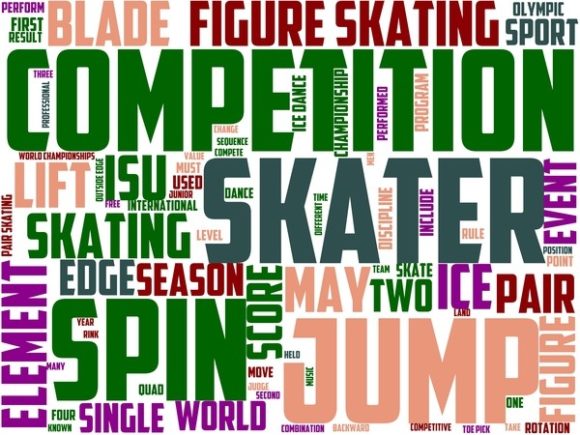
The Figure Skating Wordart Skinny Tumbler is not a physical drinkware item — it’s a digital design resource: a hand-drawn, colorful wordcloud centered on figure skating themes. Its name reflects both its visual style (slim, vertical orientation resembling a “skinny tumbler” shape) and its thematic focus. Unlike generic sports-themed clipart or AI-generated word clouds, this asset features intentional, organic linework, balanced color distribution, and curated vocabulary — terms like “glide,” “spin,” “poise,” “flow,” “grace,” “edge,” and “lift” arranged with aesthetic rhythm rather than algorithmic density. It’s delivered as a high-resolution, scalable vector or PNG file, optimized for both print and digital use.
What Sets the Figure Skating Wordart Skinny Tumbler Apart
Most wordclouds prioritize data visualization — frequency, hierarchy, or keyword weight. The Figure Skating Wordart Skinny Tumbler prioritizes design cohesion and emotional resonance. Its hand-drawn quality gives it warmth and authenticity missing from automated tools. Each letter has subtle variation in stroke weight and texture; colors are harmonized across a palette that evokes ice, motion, and elegance — cool blues, soft silvers, warm rose accents — rather than clashing saturation. Its vertical composition makes it especially effective on narrow-format items: tall mugs, slim notebooks, garment hems, or vertical social media banners.
This isn’t clipart repurposed from a stock library. It’s purpose-built for creators who value narrative consistency — those designing for skating studios, competition programs, fan merchandise, or personal craft projects where tone matters as much as content. Because it’s delivered as a layered, editable file (often with transparent background and separated text elements), users can adjust individual words, recolor sections, or isolate phrases without degrading quality — a practical advantage over flattened raster images.
How It Compares to Other Design Approaches
When evaluating resources for themed decoration or branding, the Figure Skating Wordart Skinny Tumbler sits between two common alternatives: custom illustration and algorithmic word generation.
- Custom hand-lettered illustrations offer maximum uniqueness and brand alignment but require hiring an artist, involve longer timelines, and carry higher costs — often $200–$600+ for a single concept. The Figure Skating Wordart Skinny Tumbler delivers professional-level artistry at a fraction of that investment, with immediate access and reuse rights.
- Free or low-cost wordcloud generators (like WordArt.com or TagCrowd) let users input skating terms and generate layouts instantly. However, results lack intentional spacing, consistent line quality, or color harmony. They often produce cluttered, top-heavy compositions unsuitable for apparel or packaging — and rarely support transparent backgrounds or vector export without upgrades.
Compared to broad-spectrum sports vectors (e.g., generic “athlete” or “winter sports” bundles), the Figure Skating Wordart Skinny Tumbler offers tighter thematic focus. That specificity supports authenticity — important when designing for niche communities like competitive skaters, coaches, or adult recreational programs where generic imagery feels disconnected.
Practical Use Cases and Realistic Applications
Its versatility stems from format flexibility and stylistic intention. Here’s how users apply it across contexts — with realistic constraints in mind:
- Clothing & Textiles: Printed on the back of lightweight racerback tanks or along the hem of skating skirts. Its vertical flow works well on side seams or narrow panels where wide designs would distort.
- Home Décor & Accessories: Transferred onto ceramic mugs (especially skinny tumblers, as the name suggests), embroidered onto throw pillow covers, or heat-applied to tote bags. Because the design avoids fine interior detail, it scales cleanly down to ~3 inches tall without losing legibility.
- Promotional & Event Materials: Used on invitation borders, program headers, or banner side panels for skating exhibitions or rink open houses. Its hand-drawn feel softens formal layouts while reinforcing theme.
- Digital & Print Media: Embedded in e-book chapter dividers, magazine feature spreads, or printable practice logs. Transparent background allows layering over photos of ice rinks or skaters without clipping issues.
Note: It’s not ideal for ultra-minimalist branding systems requiring strict typographic control — the organic line work resists precise alignment with sans-serif corporate fonts. Nor does it replace technical diagrams (e.g., jump notation charts) or photographic assets needed for instructional materials.
Key Tradeoffs and Decision Factors
Choosing the Figure Skating Wordart Skinny Tumbler involves weighing several practical considerations:
- Licensing scope: Most versions include extended commercial use — meaning you can apply it to products you sell (e.g., printed mugs, embroidered patches). But always verify license terms: some restrict use on POD platforms like Redbubble unless upgraded, or prohibit resale of the unaltered digital file itself.
- Adaptability vs. precision: While editable, it’s not built in parametric design software (e.g., no live text fields in Figma). Adjusting wording requires manual editing in Illustrator or Affinity Designer — feasible for designers, less so for beginners using Canva alone.
- Thematic rigidity: The vocabulary is fixed. If your project centers on synchronized skating or adaptive disciplines, you may need to supplement with additional icons or modify terms manually — something possible, but adding time.
- Color flexibility: Though designed with a cohesive palette, colors are typically editable. That said, changing one hue may disrupt the intended contrast balance — especially for accessibility (e.g., light blue on white may fail WCAG contrast thresholds if recolored carelessly).
When It’s the Right Choice — and When to Look Elsewhere
The Figure Skating Wordart Skinny Tumbler fits best when you need a ready-made, expressive, and thematically precise visual anchor — quickly, affordably, and with strong aesthetic integrity. It shines for small-batch crafters launching a skating-themed Etsy shop, studio owners updating seasonal marketing, or educators creating engaging classroom posters.
It’s less suited for projects requiring:
- Brand-specific typography: If your organization uses a proprietary typeface and demands exact font matching, a custom lettering commission remains more appropriate.
- Multilingual adaptation: The current design uses English terms only. Translating and re-balancing the layout for French, Spanish, or Japanese would require significant redesign effort.
- High-volume industrial production: For large-run packaging or licensed merchandise, licensors may require original artwork documentation or style guide integration — steps beyond what a ready-made wordart file provides.
- Data-driven messaging: If your goal is to visualize actual skater survey responses (e.g., “top 10 reasons skaters love off-ice training”), an algorithmic tool fed with real data will serve better than a static artistic interpretation.
In summary, the Figure Skating Wordart Skinny Tumbler occupies a thoughtful middle ground: more intentional than automated tools, more accessible than bespoke illustration, and more focused than generic sports graphics. Its value lies not in replacing skilled design work — but in extending it efficiently, consistently, and with genuine thematic care. For creators balancing time, budget, and authenticity, it’s a pragmatic asset worth evaluating alongside other options — not as a universal solution, but as a distinct, well-crafted tool with clear strengths and reasonable boundaries.