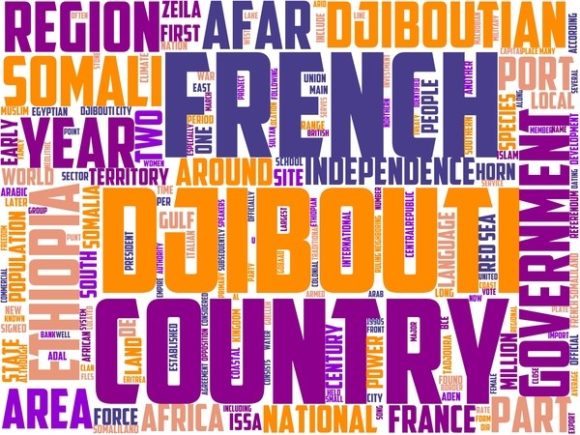
Djibouti Wordart Skinny Tumbler: A Versatile Design Asset for Real-World Creative Workflows
The Djibouti Wordart Skinny Tumbler isn’t just a decorative graphic—it’s a functional, scalable design element built for integration. At its core, it’s a hand-drawn, colorful wordcloud featuring evocative, uplifting vocabulary arranged in an organic, balanced composition. Its “skinny tumbler” layout—tall and narrow—makes it especially adaptable for vertical applications like mugs, tote bags, slim posters, or digital banners. Unlike generic clipart, this asset carries intentional visual rhythm, consistent line weight, and harmonized color saturation—qualities that matter when moving from screen to print or product.
Where It Fits in Your Creative or Business Process
Most design assets are used *after* a concept is locked in—but the Djibouti Wordart Skinny Tumbler works earlier and later in the cycle. Before launching a campaign, educators use it as a visual anchor during lesson planning; its vocabulary (words like “resilience,” “clarity,” “curiosity,” “growth”) helps define thematic focus and tone. Marketers embed it into early mood boards to align stakeholder expectations around brand voice and emotional resonance. Small business owners preview it on mockups of packaging or storefront signage to test visual hierarchy and cultural fit before committing to production.
During execution, it functions as both placeholder and final asset. A freelance designer might drop it into a client presentation slide to illustrate how typography and theme can coexist without crowding layout. A blogger inserts it into Canva templates for Pinterest pins or newsletter headers—no resizing or recoloring needed, thanks to its vector-friendly structure and transparent background. In textile design, its proportions allow seamless repeat tiling along garment hems or pillow borders, eliminating awkward cropping or scaling distortion.
Integration Across Tools and Platforms
Compatibility starts with format: high-resolution PNG (with transparency) and editable SVG files ensure flexibility across environments. In Adobe Illustrator or Affinity Designer, layers remain intact—you can isolate individual words to adjust color, spacing, or weight without breaking composition. In Cricut Design Space or Silhouette Studio, the clean outlines cut precisely on vinyl or heat-transfer material, making it ideal for custom apparel or promotional merch. For web use, the SVG scales infinitely on responsive sites and loads faster than raster alternatives—critical for e-commerce product pages where speed impacts conversion.
It also complements—not competes with—other resources. Pair it with minimalist sans-serif body text to create contrast in brochures or program booklets. Layer it subtly behind semi-transparent headlines in Keynote or Google Slides for depth in presentations. Combine it with neutral-toned photography in Canva to add warmth without visual noise. When building a brand kit, treat it not as a logo replacement but as a supporting motif—like a signature watermark on proposals or a recurring visual cue in email footers.
Practical Implementation Tips for Consistent Results
- Test contrast early: Because the wordcloud uses multiple hues, verify legibility against your base color—especially on fabric or matte paper. A quick grayscale preview in Photoshop reveals potential blending issues.
- Respect the rhythm: Don’t stretch or compress the tumbler shape. Its vertical flow depends on proportional spacing. If you need width adjustment, duplicate and mirror sections horizontally instead of distorting.
- Batch-edit smartly: Use global swatches in Illustrator to change all blues at once—or assign Pantone values for consistent print runs across business cards, magnets, and packaging.
- Organize for reuse: Save versions labeled by use case: “Djibouti-Wordart-Skinny-Tumbler-Apparel,” “Djibouti-Wordart-Skinny-Tumbler-Digital,” etc. This prevents accidental misapplication (e.g., using a low-res version for large-format posters).
Workflow Examples Across Roles
For educators: Print the Djibouti Wordart Skinny Tumbler on cardstock, laminate it, and cut into individual words for vocabulary sorting activities. Students physically rearrange terms to build definitions or connect concepts—turning passive recognition into active recall. Later, scan student-collaged versions into digital portfolios as evidence of engagement.
For small business owners: Use it as the central visual in a seasonal promotion—say, “Summer Renewal”—printed on reusable tumblers, postcards, and social media ads. The same file appears unchanged across channels, reinforcing brand cohesion without extra design labor. Track response rates per channel, then refine messaging based on which word combinations resonate most (e.g., “clarity + action” outperforms “dream + explore” in your audience).
For publishers and authors: Embed it in chapter dividers of e-books or printed guides. Its vertical orientation fits snugly between sections without disrupting reading flow. In nonfiction titles about personal development or leadership, it serves as a silent reinforcement of core ideas—no caption needed. For children’s activity books, traceable outlines let young readers color inside the words, turning design into interaction.
Long-Term Usability and Quality Control
Sustainability matters—not just environmentally, but in creative resource management. The Djibouti Wordart Skinny Tumbler avoids trendy gradients or overused motifs, favoring timeless hand-drawn texture and intentional word selection. That means it won’t feel dated in two years’ time, reducing the need for frequent redesigns. Its modular nature supports iteration: swap one word for another (“courage” → “compassion”) using the included editable layers, keeping messaging aligned with evolving goals.
Quality control begins with source files. Always verify resolution before sending to print vendors—300 DPI minimum for physical goods, 72 DPI acceptable for web banners under 1200px wide. Keep a master folder with version history: “v1-original,” “v2-pantone-adjusted,” “v3-accessibility-optimized” (with higher contrast variants). This practice prevents mismatched assets in multi-vendor projects—like when a printer uses v1 while your web team deploys v3.
Real Integration, Not Just Decoration
What separates the Djibouti Wordart Skinny Tumbler from disposable graphics is its role in decision-making. When choosing colors for a new product line, hold it up beside fabric swatches or paint chips—not to match exactly, but to assess emotional alignment. When evaluating vendor proposals, ask whether their mockups preserve the wordcloud’s balance and spacing. When training interns or junior designers, use it as a teaching tool: “Why does ‘focus’ sit higher than ‘balance’? How does line thickness guide the eye?” These aren’t aesthetic nitpicks—they’re entry points into intentionality.
It also supports accessibility-aware workflows. Though inherently visual, its vocabulary lends itself to alt-text descriptions (“hand-drawn wordcloud with terms ‘clarity,’ ‘grit,’ ‘wonder,’ and ‘purpose’ arranged vertically in warm, saturated tones”). When paired with readable fonts and sufficient contrast in surrounding layouts, it becomes inclusive—not just decorative.
Ultimately, the Djibouti Wordart Skinny Tumbler earns its place not by standing alone, but by fitting cleanly into existing systems—whether that’s a teacher’s weekly prep routine, a marketer’s campaign calendar, or a maker’s production pipeline. It doesn’t demand overhaul. It asks only for thoughtful placement—and returns clarity, cohesion, and quiet inspiration in return.