Field Hockey Wordart Banner: A Versatile Design Asset for Creative Expression
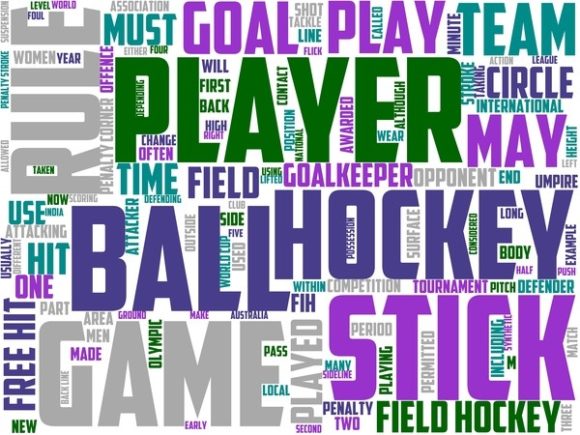
At its core, the Field Hockey Wordart Banner is more than decorative typography—it’s a carefully composed visual language built from sport-specific vocabulary, expressive line work, and intentional color harmony. Unlike generic sports graphics, this hand-drawn wordcloud integrates terms like “pass,” “sweep,” “drag flick,” “circle,” “penalty corner,” and “stickwork” into an organic, balanced composition. Each word is sized, angled, and shaded not arbitrarily, but to reflect its functional weight in the game—“goal” may dominate visually, while “tackle” or “feint” nestle with subtle emphasis. This thoughtful hierarchy makes the design both authentic to field hockey culture and immediately legible to players, coaches, and fans alike.
Why Hand-Drawn Colorful Wordclouds Resonate Across Audiences
The appeal of a hand-drawn aesthetic lies in its inherent warmth and human imperfection. In contrast to algorithmically generated word clouds, the Field Hockey Wordart Banner carries tactile nuance: slight variations in stroke thickness, soft watercolor bleed at word edges, and overlapping letters that suggest motion rather than static arrangement. These qualities translate directly into emotional resonance—whether printed on a youth team’s warm-up hoodie or featured in a university kinesiology department’s recruitment poster, the design signals approachability, energy, and intentionality.
Color plays a strategic role. Rather than defaulting to team colors alone, the palette often blends traditional field hockey hues—forest green, navy blue, burnt orange—with unexpected accents like mustard yellow or slate gray. This expands usability: a textile designer can isolate a single coral “dribble” for embroidery, while a stationery brand might extract muted teal “control” text for minimalist greeting cards. The result is a resource that supports both bold statements and refined subtlety.
Practical Applications Across Industries and Mediums
The versatility of the Field Hockey Wordart Banner emerges most clearly when examining how different professionals integrate it into real-world workflows:
- Educators and Coaches: Use the banner as a visual anchor in lesson plans or skill-development handouts. For example, a PE teacher might print a large version for gym wall display, then distribute smaller cut-outs labeled “pivot,” “channel,” and “switch” during tactical drills—turning vocabulary into kinesthetic learning tools.
- Apparel and Textile Designers: The layered, non-uniform layout adapts naturally to fabric grain and print methods. Screen printers appreciate its high-contrast letterforms for halftone reproduction; digital textile designers use vector exports to scale seamlessly across scarves, socks, and reversible jackets without pixelation or distortion.
- Small Business Owners (e.g., Sports Camps, Academy Studios): Incorporate the banner into branded merchandise—not just as centerpieces, but as repeat patterns on tote bags or as foil-stamped motifs on water bottles. Its readability at small sizes (down to 1.5 cm height) makes it effective on business cards and wristband tags.
- Content Creators and Publishers: Ebook cover designers layer translucent versions behind athlete portraits to imply narrative depth; magazine art directors use cropped sections—like a cluster of “speed,” “vision,” and “anticipation”—as chapter dividers in coaching manuals.
- Home Décor and Gift Makers: Because the design avoids photorealism or dated clipart tropes, it ages gracefully. A ceramicist transfers “teamwork” and “grit” onto handmade mugs using underglaze decals; a woodworker laser-engraves key phrases from the banner onto walnut coasters, preserving the original line quality through precise vector paths.
Technical Considerations for High-Fidelity Implementation
Successful integration hinges on understanding file structure and scalability. The Field Hockey Wordart Banner is typically delivered in layered vector formats (AI, EPS, SVG), enabling users to isolate individual words or color groups without compromising resolution. This matters critically for production: a packaging designer adjusting CMYK values for spot-color printing needs independent control over “green” and “orange” word clusters; a sticker manufacturer requires clean alpha channels to support die-cutting around irregular word shapes.
Raster versions (high-DPI PNG/TIFF) are optimized for specific use cases—such as large-format poster printing where anti-aliased edges prevent halation on matte paper—but should never be upscaled beyond their native dimensions. Observant users note that the hand-drawn texture includes intentional micro-variations: some “l” stems taper slightly, certain “o” loops have uneven curvature. These details vanish if raster files are enlarged carelessly, undermining the design’s authenticity.
For digital applications, SVG export preserves interactivity—words can be assigned unique CSS classes for hover effects on websites or embedded animations in e-learning modules. One university athletic department used this capability to build an interactive “Hockey Vocabulary Builder,” where clicking “bully-off” triggered a short video demonstration. That level of engagement is only possible because the source file maintains semantic separation between lexical units.
User-Centered Adaptation Strategies
Not all users require the full banner. Savvy implementers treat it as a modular toolkit. A school fundraiser committee, for instance, extracted only the words “spirit,” “unity,” and “pride” to create custom enamel pins—retaining the original line weight and spacing so pins felt cohesive with larger banners displayed at games. Similarly, a physical therapist specializing in sports rehab adapted “balance,” “core,” and “recovery” into a wall chart for patient education, adjusting saturation to improve readability for older adults without altering stroke integrity.
Language localization is another practical adaptation. While English remains the primary lexicon, bilingual programs have successfully substituted translated equivalents (“pase,” “gol,” “defensa”) using the same hand-drawn style guide—ensuring cultural relevance without sacrificing visual consistency. Designers report that maintaining baseline alignment and relative sizing across languages preserves the banner’s rhythmic flow, a detail often overlooked in automated translation overlays.
Long-Term Value Beyond Aesthetic Appeal
What distinguishes the Field Hockey Wordart Banner from disposable trend-based graphics is its capacity to evolve with usage. Unlike stock imagery that feels increasingly generic with repetition, its hand-crafted origin lends it narrative durability. A coach who first used it on a 2021 tournament t-shirt may revisit the same file in 2026 to refresh a scholarship application brochure—its timelessness rooted in craftsmanship, not novelty.
This longevity supports sustainability goals. Print-on-demand studios report lower waste rates when using vector-based wordcloud assets because clients rarely request redesigns due to fading trends. Likewise, educators reusing the banner across multiple academic years reduce reliance on annually updated clipart subscriptions—shifting budget allocation toward tactile learning materials instead.
From an archival standpoint, the banner functions as a cultural artifact. When digitized alongside oral histories from retired umpires or scanned training logs from junior leagues, it becomes part of a broader documentation effort—preserving how terminology, values, and visual identity coalesce within field hockey communities. Its presence on community center murals or library displays subtly reinforces sport literacy beyond competitive contexts.
Getting Started Without Overcomplication
Beginners often assume complex software is required—but many impactful uses start simply. A parent volunteer designing a birthday party invitation can paste the banner into Canva, adjust opacity to 30%, and overlay names in clean sans-serif type for contrast. A student creating a presentation about women’s field hockey history might use one phrase—“legacy,” “resilience,” or “pioneers”—as a slide background, letting the hand-drawn texture add gravitas without competing with data visuals.
Key principle: Respect the rhythm. The banner’s power comes from its intentional imbalance—some words lean right, others curl upward, negative space pulses between clusters. Cropping too tightly or forcing rigid grid alignment disrupts that vitality. Instead, rotate a section 7 degrees, let “power” extend slightly beyond a card’s edge, or mirror “defense” vertically to echo a goalkeeper’s stance. These micro-adjustments honor the original design logic while personalizing output.
Ultimately, the Field Hockey Wordart Banner thrives not as a finished product, but as a collaborative prompt—an invitation to interpret, adapt, and embed field hockey’s language into everyday objects and experiences. Whether stitched onto a child’s backpack or silkscreened onto a limited-edition zine, it carries forward something essential: the idea that how we name the game shapes how we live it.