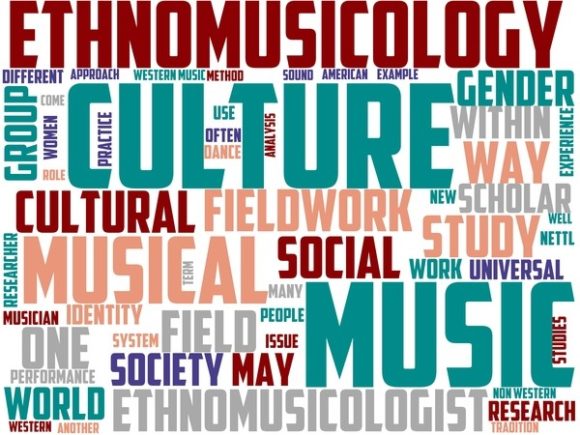
Ethnomusicology Wordart Tshirt: Where Cultural Curiosity Meets Wearable Design
Imagine a t-shirt that doesn’t just display text—but tells a story. Not through a single slogan or logo, but through a vibrant, hand-drawn wordcloud where “rhythm,” “griot,” “sitar,” “fieldwork,” “call-and-response,” “kora,” “oral tradition,” and “resonance” interweave in color and curve. That’s the Ethnomusicology Wordart Tshirt: a thoughtful fusion of scholarly depth and visual warmth, designed for those who value both cultural insight and expressive design.
More Than Decoration—A Visual Language for Cultural Engagement
This isn’t generic word art. Each Ethnomusicology Wordart Tshirt features a carefully curated, hand-illustrated wordcloud grounded in real disciplinary vocabulary—terms drawn from decades of research, field recordings, performance practice, and cross-cultural dialogue. The words aren’t randomly selected; they reflect core concepts taught in university courses, referenced in journals like Ethnomusicology and Yearbook for Traditional Music, and echoed in community-based music initiatives worldwide.
That intentionality matters. Today’s consumers—especially educators, musicians, museum staff, festival organizers, and ethnomusicology students—don’t just want aesthetics. They seek authenticity. A hand-drawn aesthetic signals care, human craft, and respect for the traditions represented. Unlike algorithmically generated clouds, this design invites pause: readers lean in, recognize terms they’ve studied or heard, and feel connected—not to a trend, but to a living field of inquiry.
Fitting Into How We Live, Learn, and Share Today
Several quiet shifts make the Ethnomusicology Wordart Tshirt increasingly relevant. First, learning is no longer confined to classrooms. Podcasts like World Music Matters, YouTube channels documenting instrument-making in rural Mali or Balinese gamelan rehearsals, and open-access archives like the Smithsonian Folkways Recordings have democratized access to global sound cultures. People are encountering ethnomusicological ideas outside formal education—and they want ways to signal that engagement visually.
Second, personal expression has become more values-driven. Wearing clothing that reflects intellectual curiosity, cultural humility, or advocacy for musical diversity resonates with professionals across sectors—from nonprofit program officers designing inclusive arts curricula to indie record label founders promoting underrepresented artists. It’s subtle branding of identity, not affiliation.
Third, hybrid workflows mean creators often move fluidly between digital and physical output. A designer might use the same wordcloud asset to print a t-shirt, create a workshop handout, design a conference banner, or illustrate a chapter opener in an e-book about decolonizing music pedagogy. Its versatility supports real-world production needs—not just novelty.
From Apparel to Everyday Tools: Practical Uses Beyond the Closet
The Ethnomusicology Wordart Tshirt is part of a broader, reusable creative resource—a beautiful hand-drawn colorful wordcloud designed for flexible application. Its strength lies in adaptability without dilution of meaning.
- Education: Print it on posters for music history units or as discussion prompts in undergraduate seminars. Use individual words as flashcards for terminology review.
- Community outreach: Feature it on flyers for world music festivals, intercultural storytelling nights, or oral history projects—communicating thematic focus at a glance.
- Creative entrepreneurship: Integrate elements into textile patterns for scarves or tote bags sold by small studios supporting artisan collaborations.
- Professional development: Include in slide decks for workshops on culturally responsive teaching or ethical collaboration in music documentation.
- Home and studio décor: Frame a high-resolution print as wall art in a music classroom, recording studio, or academic office—grounding space in purpose and perspective.
Because it’s hand-drawn—not clipart—it retains texture and personality across scales and media. It holds up on a tiny enamel pin, reads clearly on a large-format poster, and adds tactile charm when screen-printed onto organic cotton. That consistency builds recognition and trust, whether you’re launching a new podcast or refreshing your department’s visual identity.
Why Hand-Drawn Still Matters in a Digital-First World
Amid AI-generated graphics flooding social feeds, there’s growing appreciation for visible human effort. Studies in design cognition show that hand-rendered typography and illustration improve information retention and emotional resonance—particularly for complex or abstract subjects. Ethnomusicology, with its emphasis on embodied knowledge, oral transmission, and relational practice, aligns naturally with this sensibility.
You’ll notice subtle variations in line weight, organic spacing, and gentle overlaps—details impossible to replicate convincingly with automated tools. Those imperfections don’t weaken the design; they reinforce its alignment with the discipline’s ethos: music as lived experience, not just data points. When a student wears the t-shirt to a fieldwork presentation—or a curator uses the wordcloud in an exhibition label—they’re signaling attention to process, not just product.
Thoughtful Integration, Not Just Trend Adoption
Using the Ethnomusicology Wordart Tshirt—or any element of the wordcloud—works best when paired with context. A t-shirt alone sparks curiosity; pairing it with a short bio (“Studying mbira traditions in Zimbabwe”) or a QR code linking to a playlist of featured instruments deepens impact. Similarly, using the cloud in promotional materials gains clarity when accompanied by brief definitions or listening suggestions—especially for audiences less familiar with the field.
For marketers and small business owners: this asset supports mission-aligned branding. If your shop sells handmade djembes or publishes fieldwork journals, incorporating the wordcloud into packaging or email headers reinforces authenticity without overt messaging. It’s inclusion by design—not declaration.
For educators: consider co-creating variations with students. Ask them to suggest additions based on their own research or local traditions—turning the wordcloud into a collaborative, evolving artifact rather than a static image. That practice mirrors ethnomusicology’s participatory roots.
A Resource That Grows With Your Practice
The Ethnomusicology Wordart Tshirt isn’t a one-off novelty. It’s part of a toolkit designed for longevity and layered use. Because the underlying wordcloud is provided in scalable vector format (and often with editable layers), users can isolate terms for custom applications—rearranging “taiko,” “djembe,” and “bodhrán” into a percussion-focused version, or highlighting “archive,” “consent,” and “repatriation” for ethics training materials.
This modularity reflects how modern creative work actually happens: iterative, contextual, and responsive. You’re not locked into a single interpretation—you’re invited to engage, adapt, and extend meaning in ways that serve your specific audience, medium, or goal.
Realistic, Respectful, Ready-Made
There’s no claim here that wearing a t-shirt changes systemic inequities in music scholarship or industry. But well-designed, thoughtfully sourced visual tools do matter. They shape first impressions, open conversations, and honor complexity without oversimplifying it. The Ethnomusicology Wordart Tshirt does that quietly and consistently—by centering language that reflects rigor, respect, and relationship.
Whether you’re preparing for a conference, launching a community project, updating your online portfolio, or simply choosing what to wear while transcribing field recordings—this design meets you where you are. It doesn’t shout. It invites. And in doing so, it supports a broader shift: toward creative expression that’s informed, intentional, and deeply human.