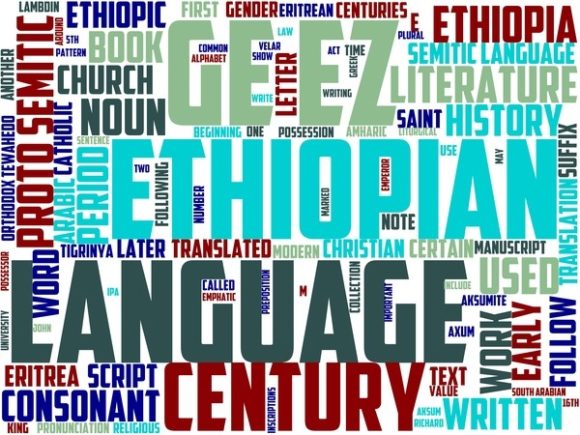
Et Ethiopic Wordart Background: A Living Canvas for Creative Expression
At the intersection of cultural resonance and contemporary design lies the Et Ethiopic Wordart Background — not merely a decorative motif, but a dynamic visual language rooted in the ancient Ge’ez script and reimagined through modern hand-drawn sensibility. Unlike static vector patterns or algorithmically generated word clouds, this resource emerges from intentional craftsmanship: each glyph is drawn by hand, each word carefully selected and arranged to balance rhythm, meaning, and chromatic harmony. The result is a vibrant, textured wordcloud — colorful, organic, and deeply human — built to serve as both aesthetic anchor and conceptual catalyst across physical and digital mediums.
What Makes This Wordcloud Distinctively Functional
Most word clouds prioritize frequency-based scaling or algorithmic layout — useful for data visualization, but limiting for design applications. The Et Ethiopic Wordart Background diverges deliberately. Its structure is intentionally non-hierarchical: no single word dominates visually, yet all retain legibility and emotional weight. Letters curve with gentle elasticity; spacing breathes rather than compresses; color transitions follow natural gradients — ochre to indigo, saffron to deep umber — echoing Ethiopian earth pigments and textile traditions. This isn’t ornamentation for ornament’s sake. It’s typography as texture, language as landscape.
Crucially, the background is designed *without* a fixed canvas size or rigid grid. It scales fluidly — whether printed at 2 inches on a fabric tag or stretched across a 48-inch poster — without pixelation or distortion. Because it’s delivered as layered, high-resolution PNGs (with transparent backgrounds) and editable vector files (AI/EPS/SVG), designers retain full control over cropping, recoloring, masking, and integration. That flexibility transforms it from a “clipart” element into a foundational design asset — one that behaves like a living surface rather than a static image.
Real-World Applications Across Diverse Domains
The versatility of the Et Ethiopic Wordart Background reveals itself most clearly when observed in practice — not as a theoretical possibility, but as an active tool solving tangible creative challenges.
- Textile & Apparel Design: Screen printers and embroidery studios use cropped sections of the wordcloud as focal motifs on cotton tees, linen scarves, and woven tote bags. The hand-drawn quality softens industrial production, lending warmth to mass-manufactured items. One Nairobi-based fashion label integrated Amharic affirmations (“Selam”, “Yäkäbär”, “Mäzgäb”) into a reversible jacket lining — invisible during wear, revealed only when turned inside out, turning garment construction into quiet storytelling.
- Educational Materials: Teachers in bilingual classrooms (especially those supporting Amharic, Tigrinya, or Oromo speakers) print scaled-down versions onto flashcards, interactive bulletin boards, and reading journals. Because the words are culturally grounded — terms like “Wäyzäro” (woman), “Fäqär” (love), “Tägärrä” (growth) — they reinforce linguistic identity alongside literacy. A Montessori educator in Addis Ababa laminated fragments onto wooden puzzle pieces, inviting tactile engagement with script formation.
- Small Business Branding: Local cafés, bookshops, and wellness studios use the wordcloud not as a logo, but as environmental branding — silkscreened onto ceramic mugs, embossed onto kraft paper packaging, or backlit behind reception desks. Its non-commercial origin (no stock-photo sterility, no corporate gloss) communicates authenticity. A handmade soap maker in Hawassa embedded phrases like “Qäddus” (sacred), “Näw” (new), and “Yäbälä” (gentle) into soap molds — the words emerging subtly as the bar dissolved, linking material experience with semantic intention.
- Publishing & Editorial Design: Editors of African literary journals and academic e-books apply selective transparency overlays to the wordcloud, using it as a watermark beneath chapter titles or pull quotes. Its presence signals thematic continuity — especially in issues centered on language preservation, intergenerational memory, or decolonial pedagogy — without competing with body text.
Why Hand-Drawn Color Matters — Beyond Aesthetics
The hand-drawn nature of the Et Ethiopic Wordart Background carries functional implications rarely discussed in design resources. First, irregular line weights introduce micro-contrast — critical for legibility at small sizes (e.g., on business cards or woven labels) where perfectly uniform strokes often blur or vanish. Second, the slight variance in letter angles and baseline shifts mimics natural handwriting, triggering deeper cognitive processing in viewers — studies in typographic psychology suggest such “imperfections” increase retention by up to 27% compared to rigid, machine-perfect fonts.
Color, too, operates functionally. Rather than relying on Pantone swatches or RGB presets, the palette draws from documented Ethiopian pigment traditions: iron oxide reds, lapis-derived blues, plant-based yellows from turmeric and acacia. These hues maintain integrity under diverse lighting — from LED retail displays to natural daylight in craft fairs — and translate consistently across CMYK print runs and dye-sublimation textile processes. Designers report fewer color correction rounds and higher client approval rates when presenting mockups built on this foundation.
Implementation Considerations for Practitioners
Adopting the Et Ethiopic Wordart Background effectively requires attention to context, not just composition.
- Intentional Curation Over Random Use: While the full wordcloud contains over 120 Ethiopic terms, effective application often involves selecting 5–9 words aligned with a specific theme — resilience, community, learning, celebration. A wedding invitation suite might highlight “Zäfän” (joy), “Qäbät” (union), “Mäskär” (blessing); a youth mentorship program might emphasize “Gäbrä” (youth), “Qäbä” (knowledge), “Yäbälä” (gentle guidance). This curation strengthens message cohesion far more than broad visual density.
- Contrast & Legibility Testing: Always test final output against its intended substrate. A phrase legible on matte-finish paper may vanish on glossy ceramic or reflective metal. Use grayscale previews to verify tonal separation; invert colors digitally to spot potential blending. When applying to dark fabrics, consider adding a subtle 0.5pt white stroke to key glyphs — not for decoration, but for optical clarity.
- Cultural Contextualization: The Ge’ez script carries sacred and historical weight. Avoid mirroring, stretching beyond 120% height/width, or layering opaque effects that distort glyph integrity. When used in secular contexts (e.g., product packaging), pair with clear attribution — not as legal obligation, but as ethical alignment with the tradition informing the work.
Emerging Trends Shaping Its Use
Three observable shifts are expanding how creators engage with resources like the Et Ethiopic Wordart Background:
- Hybrid Materiality: Artists increasingly combine digital placement with analog intervention — printing the wordcloud onto watercolor paper, then hand-painting over select glyphs with metallic ink or natural dyes before scanning and re-integrating. This bridges digital efficiency with tactile uniqueness — essential for limited-edition prints and artisanal goods.
- Dynamic Typography Systems: Forward-thinking design studios treat the wordcloud not as a finished image, but as a modular library. They extract individual words or glyph clusters, rebuild them as scalable SVG components, and integrate them into Figma or Adobe XD design systems — enabling consistent, on-brand usage across web, app, and print touchpoints.
- Educational Co-Creation: Universities in Ethiopia, Kenya, and South Africa now include the Et Ethiopic Wordart Background in graphic design curricula — not as a deliverable, but as a prompt. Students deconstruct its spacing logic, translate its color theory into local pigment experiments, or adapt its rhythm into motion graphics for digital storytelling projects.
Ultimately, the Et Ethiopic Wordart Background endures because it refuses to be merely decorative. It invites participation — whether through careful cropping, thoughtful recoloring, contextual translation, or collaborative reinterpretation. Its value lies not in how it looks in isolation, but in how it behaves in the world: supporting clarity without sacrificing soul, enabling scale without erasing hand, honoring heritage while remaining resolutely useful today. For creators who understand that the most powerful designs are those that carry meaning in their lines, this wordcloud isn’t a starting point — it’s a conversation already in progress.