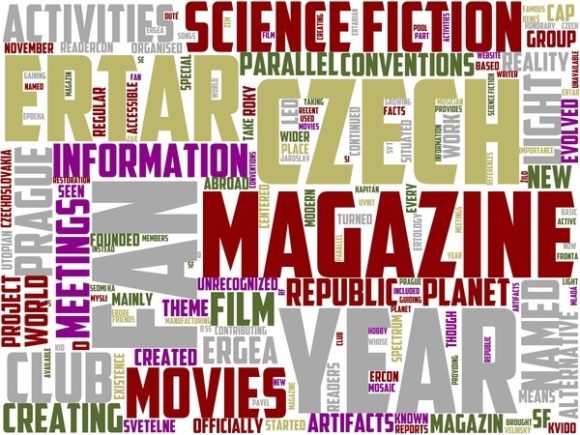
Ertology Wordart Background: A Versatile Hand-Drawn Wordcloud for Real-World Creative Work
When you’re designing a product label, preparing a workshop handout, or launching a small-batch apparel line, visual cohesion matters—not as decoration, but as functional communication. The Ertology Wordart Background is a hand-drawn, colorful wordcloud built for that precise intersection: where meaning, aesthetics, and practical application meet. It’s not just a graphic—it’s a flexible asset designed to integrate into real creative workflows, from early concepting to final production.
What It Is—and Where It Fits in Your Process
The Ertology Wordart Background is a high-resolution, layered design featuring organic, hand-lettered words arranged in a balanced, non-repetitive cloud layout. Unlike algorithm-generated word clouds, it avoids rigid geometry and pixel-perfect symmetry—instead offering natural spacing, varied weights, and intentional color harmony across the palette. This makes it suitable for both digital and print use without requiring heavy editing.
It fits most naturally during the *mid-to-late stage* of a project—after core messaging is defined but before final asset lock. For example: an educator finalizing a classroom poster will already know which themes to highlight (“curiosity,” “collaboration,” “resilience”). Rather than building typography from scratch, they drop in the Ertology Wordart Background, adjust opacity or hue to match their brand palette, and overlay key headers or icons. That saves 30–60 minutes per asset—and maintains visual consistency across a series of materials.
How It Works With Other Tools and Assets
This wordcloud isn’t meant to stand alone. Its strength lies in interoperability. It exports cleanly as PNG (with transparent background), SVG, and layered PSD—so it adapts whether you’re using Canva for quick social banners, Adobe Illustrator for textile repeats, or Procreate for hand-finished mockups. Because the letterforms are drawn—not generated—it scales crisply at any size, making it viable for embroidery digitizing or large-format wall decals without raster distortion.
It also pairs predictably with common complementary assets: vector icons (especially hand-drawn or line-art styles), neutral-tone photo overlays, and minimalist sans-serif typefaces. If you’re building a mood board for a new product line, placing the Ertology Wordart Background beside fabric swatches and Pantone chips helps test color resonance before committing to production. Likewise, when prepping a pitch deck, embedding it behind a headline slide adds texture without competing with data points.
Practical Uses Across Roles and Outputs
Different professionals leverage this background in distinct but overlapping ways. Here’s how it functions in context:
- Small business owners use it on packaging inserts and thank-you cards—layering it beneath short copy like “Hand-poured • Small-batch • Made with care” to reinforce values visually, without cluttering the message.
- Textile designers extract individual words or clusters as repeat motifs, rotating and recoloring elements to build custom fabric patterns for scarves or tote bags—no need to redraw each element from scratch.
- Educators and trainers import it into Google Slides or Keynote, then use the “Format Options > Transparency” slider to soften it as a subtle backdrop behind bullet points—adding warmth without sacrificing readability.
- Bloggers and content creators repurpose sections of the cloud as Instagram Story stickers or Pinterest pin backgrounds—cropping tight around phrases like “start here” or “deep dive” to guide attention organically.
- Publishers and indie authors apply it to ebook cover thumbnails or chapter dividers, adjusting saturation to match tone—lower saturation for reflective memoirs, higher contrast for energetic self-help titles.
Implementation Tips That Save Time and Maintain Quality
Not all wordclouds behave the same way in production. Here’s what works—and what to watch for—when using the Ertology Wordart Background:
- Start with your dominant color. Before importing, identify your primary brand or project hue. Then, use your editor’s “Hue/Saturation” adjustment to shift the entire cloud toward that base—preserving relative contrast between words while ensuring harmony.
- Reserve clipping masks for precision. Instead of erasing unwanted words manually, create a shape (circle, hexagon, or custom path) and use it as a clipping mask. This keeps edits non-destructive and reusable across formats.
- Test legibility early. Zoom out to 25% view—does the cloud still read as texture, not noise? If individual words distract rather than support, reduce opacity to 15–25% or apply a subtle Gaussian blur (0.8–1.2 px).
- Organize layers by function, not origin. In Photoshop or Figma, group layers as “Background Texture,” “Primary Text,” and “Accent Icons”—not “Ertology_Layer_1” or “Wordcloud_v2.” This speeds up collaboration and future edits.
Long-Term Use: Consistency Without Repetition
A common concern with reusable design assets is visual fatigue—using the same background across too many touchpoints until it feels generic. The Ertology Wordart Background avoids this through its inherent variation: no two words share identical stroke weight, angle, or fill density. That means you can use it across business cards, email headers, and trade show banners without monotony—especially when combined with thoughtful cropping and color modulation.
For teams or studios managing multiple clients, treat it like a modular toolkit. Keep a master file with labeled variants: “Warm_Tone,” “Monochrome_Line,” “Pastel_Fade.” Each version is derived from the original but optimized for specific contexts—reducing decision fatigue while preserving creative control.
Compatibility and Preparation Considerations
No special software is required, but preparation affects efficiency. If you work primarily in Canva, upload the PNG first, then use “Effects > Transparency” and “Adjustments > Color Temperature” to fine-tune. For print projects, confirm your printer accepts RGB files—or convert to CMYK *after* color adjustments, not before, to preserve vibrancy.
Also consider licensing scope: the standard license covers unlimited personal and commercial use across physical and digital products, including resale items like mugs or notebooks. But if you’re developing a SaaS dashboard or app UI where the background appears dynamically, verify extended usage terms—some platforms require attribution or separate licensing for embedded assets.
Why It Fits Real Workflows—Not Just Inspiration Boards
Creative tools succeed when they shorten the gap between idea and execution—not when they dazzle in isolation. The Ertology Wordart Background does that by meeting users where they already are: in mid-process, under deadline, balancing quality with speed. It doesn’t replace strategy or writing; it supports them. It doesn’t eliminate design labor; it redirects it toward higher-value decisions—like how a phrase lands emotionally, or how color guides a viewer’s eye across a poster.
That’s why it shows up consistently in the toolkits of educators refining lesson kits, marketers refreshing seasonal campaigns, and makers prototyping limited-edition collections. It’s not about adding more to the workflow—it’s about removing friction from the parts that already exist.
Final Thought: Integrate, Don’t Isolate
Treat the Ertology Wordart Background as part of your working library—not a one-off download. Store it in your cloud-synced design assets folder with clear naming (e.g., “Ertology_Wordart_BG_Warm_v2”), tag it in Notion or Airtable for quick search, and revisit it every quarter when updating templates or brand guidelines. Over time, it becomes less of a “graphic” and more of a familiar, reliable component—like a trusted font or a go-to grid system. That’s how practical design assets earn long-term value: not by standing out, but by fitting in—smoothly, consistently, and without fuss.