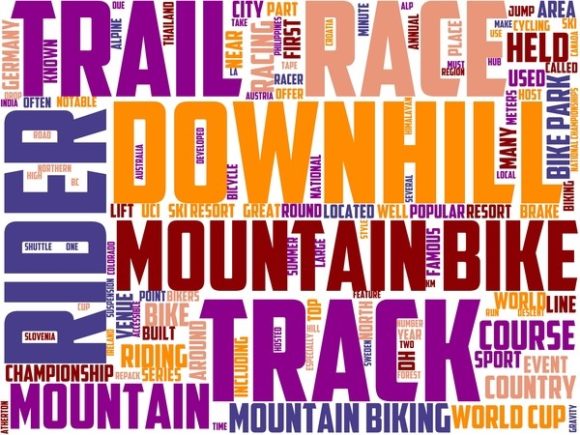
Downhill Mountain Biking Wordart Print
A Downhill Mountain Biking Wordart Print is a hand-drawn, colorful wordcloud illustration centered around themes, terms, and concepts associated with downhill mountain biking — such as “gravity,” “flow,” “steep,” “trail,” “speed,” “drop,” “adrenaline,” “control,” and “freeride.” Unlike standard typography or clipart, this design uses layered, organic letterforms arranged visually to form a cohesive, artistic composition. It’s delivered as a high-resolution digital file (typically PNG or SVG), optimized for both screen use and professional printing.
This type of wordart is intentionally versatile: it’s not limited to wall art. Its scalable vector or raster format supports adaptation across physical and digital applications — from screen-printed t-shirts and embroidered patches to custom packaging, editorial layouts, or digital marketing assets.
Why Consider a Downhill Mountain Biking Wordart Print?
People explore this design for practical and expressive reasons. Some seek visual shorthand that communicates passion for the sport without relying on photography or complex illustrations. Others value its flexibility: a single design can serve multiple roles across branding, personal projects, or small-batch product creation. Educators, event organizers, and cycling clubs may use it to reinforce thematic messaging in presentations or promotional materials. Hobbyists and makers often choose it as a starting point for DIY décor, apparel, or stationery — especially when consistency and authenticity matter more than generic stock imagery.
Benefits and Practical Advantages
One key benefit is thematic cohesion. Because the words are curated and visually integrated, the print conveys tone and subject in a way that isolated icons or slogans cannot. It supports storytelling at a glance — useful for posters announcing trail days, workshop flyers, or apparel celebrating local riding culture.
The hand-drawn aesthetic adds warmth and approachability, distinguishing it from overly polished or algorithmically generated word clouds. This makes it well-suited for contexts where human touch matters — craft fairs, community events, or indie brand identities. Its color-rich, layered composition also translates well across mediums: it retains legibility on fabric when printed with appropriate ink methods, holds detail on ceramic mugs under sublimation, and scales cleanly for large-format posters.
From a production standpoint, most versions include transparent backgrounds and editable layers (when supplied in vector format), enabling straightforward customization — for example, adjusting a single word’s size or swapping a term like “berm” for “jump” to better match regional trail vocabulary.
Tradeoffs and Realistic Expectations
While flexible, the Downhill Mountain Biking Wordart Print isn’t universally suitable. Its effectiveness depends heavily on context and execution. Because it relies on text as image, legibility can diminish at very small sizes — particularly below 2 inches wide in print or under 150 pixels on screen. Fine details (like subtle line weight variation or overlapping letters) may blur or disappear in low-resolution output or certain embroidery techniques.
It also assumes a baseline familiarity with downhill biking terminology. For general-audience applications — say, a city-wide outdoor recreation brochure — the niche vocabulary may require supporting visuals or explanatory text to ensure clarity. Likewise, users seeking photorealistic or technical representations (e.g., bike schematics or elevation profiles) will find this stylistic approach insufficient on its own.
Licensing is another consideration. Not all versions permit commercial use by default. Users intending to apply the design to resale products — such as branded merchandise or printed books — must verify usage rights. Some files restrict modification or prohibit redistribution in derivative digital formats (e.g., embedding in an app or selling as part of a design bundle).
When It’s a Strong Fit
This wordart works best when your goal aligns with one or more of the following:
- You’re designing for an engaged, niche audience. Cyclists, trail advocates, or adventure educators respond well to authentic, terminology-accurate visuals that reflect shared experience.
- You need consistent visual language across multiple touchpoints. A single wordart file can unify business cards, event banners, social media graphics, and merchandise — reducing design time while reinforcing identity.
- You prioritize handmade or artisanal aesthetics. The sketch-like quality complements natural fibers, kraft paper packaging, or rustic interior décor — unlike rigid, geometric fonts or stock vectors.
- You’re working within constrained budgets or timelines. Compared to commissioning custom illustration, a ready-made wordart print offers immediate usability with minimal revision needed.
When Alternatives May Be More Appropriate
Consider other options if:
- Your project requires strict accessibility compliance. Text-as-image doesn’t support screen readers or dynamic resizing. In those cases, SVG with semantic markup or styled HTML text may be preferable.
- You need multilingual or highly customizable content. While some wordart files allow editing, many are flattened. If you regularly adapt messaging across languages or campaigns, a modular typographic system may offer greater long-term flexibility.
- Photographic realism or data visualization is essential. Trail maps, safety infographics, or gear comparison charts rely on precision and scale — functions outside the scope of decorative wordart.
- You’re developing a scalable brand system. A wordcloud is expressive but static. Brands planning extensive visual expansion (e.g., animated web elements or responsive UI components) may benefit more from adaptable icon sets or generative design systems.
Making an Informed Choice
Evaluating a Downhill Mountain Biking Wordart Print starts with clarifying your primary use case. Ask: Is this for internal inspiration, client-facing promotion, or direct-to-consumer product? What resolution and format do your output channels require? Does your team have access to design software for minor adjustments — or do you need a plug-and-play solution?
Review sample files carefully. Zoom in to assess edge clarity and spacing between words. Check whether colors are defined in CMYK (for print) or RGB (for digital), and confirm whether transparency is preserved. If licensing is unclear, contact the creator before purchase — especially if commercial reuse is intended.
Finally, compare it against alternatives not just on cost or convenience, but on alignment with your communication goals. A well-chosen wordart print strengthens recognition and resonance. But if your objective is instruction, navigation, or broad inclusivity, investing time in complementary assets — clear photography, accessible typography, or annotated diagrams — may yield more durable results.
In summary, the Downhill Mountain Biking Wordart Print serves a specific, valuable role: distilling culture and concept into a single, adaptable visual artifact. Its usefulness grows when matched thoughtfully to audience, medium, and intent — not as a default choice, but as a deliberate one.