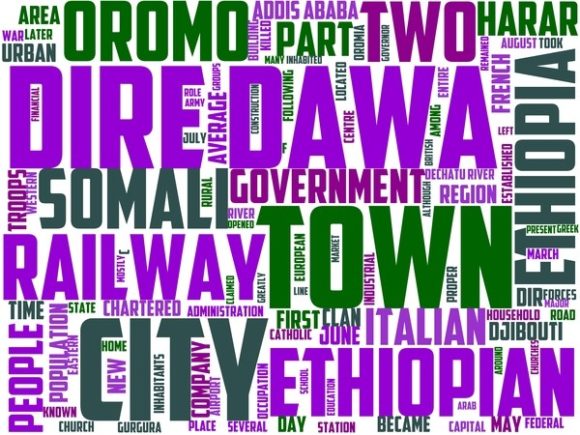
Dire Dawa Wordart Background: A Versatile Creative Catalyst for Modern Designers and Brands
In today’s fast-paced creative economy, designers, entrepreneurs, and marketers are increasingly seeking assets that bridge authenticity with adaptability—tools that feel human-made yet scale effortlessly across physical and digital touchpoints. Enter the Dire Dawa Wordart Background: a hand-drawn, colorful wordcloud design rooted in organic texture and intentional composition—not algorithmically generated, but thoughtfully crafted. More than decorative filler, it functions as a flexible visual language: expressive enough for artisanal storytelling, structured enough for commercial consistency, and richly layered enough to support both emotional resonance and brand clarity.
What Is the Dire Dawa Wordart Background—Really?
The Dire Dawa Wordart Background is not simply a collection of overlapping words. It’s a cohesive, hand-illustrated composition where typography, color, spacing, and rhythm converge to evoke warmth, energy, and intentionality. Unlike generic clipart or AI-generated word clouds—often flat, repetitive, or contextually hollow—this background emerges from tactile process: ink lines, subtle watercolor washes, deliberate hue transitions (think terracotta meeting saffron, indigo blending into sage), and carefully weighted letterforms. The “Dire Dawa” reference nods to cultural grounding—evoking the vibrant textile traditions, market energy, and linguistic richness of Ethiopia’s historic city—but without literal representation. Instead, it translates those sensibilities into universal visual grammar: inclusive, textured, and alive with quiet confidence.
Its versatility is built-in. Each element—words like “create,” “grow,” “gather,” “bold,” “joy,” “craft,” “root,” “rise”—is arranged not randomly, but with compositional hierarchy: larger terms anchor focal points; smaller ones nest organically, inviting closer looking. Negative space breathes. Color clusters suggest thematic groupings without rigid categorization. This makes the Dire Dawa Wordart Background inherently modular—it can be cropped, masked, layered, tinted, or isolated for use across diverse applications, from embroidery patterns to web banners.
Why It Resonates Now: Aligning With Evolving Creative Expectations
Three converging shifts explain why tools like the Dire Dawa Wordart Background are gaining traction among professionals:
- The Rejection of “Too Perfect” Aesthetics: After years of sleek minimalism and algorithmic uniformity, audiences—and creators—are gravitating toward work that signals care, craft, and human presence. A hand-drawn wordcloud signals intentionality. It says: This wasn’t auto-generated; it was considered. That nuance builds trust, especially in saturated markets where differentiation hinges on perceived authenticity.
- The Rise of Multi-Channel Brand Consistency: Today’s brands don’t live in one place—they live on Instagram feeds, woven into tote bags, printed on limited-run notebooks, embossed on business cards, and embedded in e-book chapter headers. Professionals need assets that retain character whether scaled to 2 inches on a sticker or stretched across a 48″ trade show banner. The Dire Dawa Wordart Background delivers that elasticity: its high-resolution vector or layered PSD format ensures crisp output at any size, while its color palette remains harmonious under CMYK print calibration or RGB screen rendering.
- The Democratization of Production Tools: With accessible platforms like Canva, Adobe Express, and even Procreate enabling rapid iteration, creatives no longer wait for full design suites to execute ideas. The Dire Dawa Wordart Background is optimized for this reality—it imports cleanly, layers intuitively, and includes transparent backgrounds and editable text elements (where applicable), reducing friction between concept and execution.
Real-World Applications: Beyond Decoration, Into Strategy
When used intentionally, the Dire Dawa Wordart Background moves beyond ornamentation to serve functional and strategic roles. Consider these examples:
For Entrepreneurs & Small Businesses
A wellness coach uses a cropped section of the background—featuring words like “breathe,” “balance,” and “ground”—as the base layer for her workshop invitation. She overlays her logo in clean sans-serif type, creating contrast between timeless hand-drawn warmth and modern professionalism. The same section becomes the pattern for cotton tea towels sold in her online shop—reinforcing brand ethos through tactile experience.
For Marketers & Content Creators
An education-tech startup integrates the background into a campaign around “Lifelong Learning.” They extract individual words (“curious,” “explore,” “learn”) and animate them sequentially in a 15-second social video—each word appearing with a gentle ink-drip effect. Later, those same words appear laser-cut into acrylic desk accessories for team gifting, linking digital engagement to physical brand memory.
For Textile & Product Designers
A sustainable fashion label adapts the color palette—swapping saturated tones for muted, earth-derived hues—and repeats the wordcloud at varying scales across organic cotton fabric. The result? A subtle, story-rich print that communicates values without slogans. When photographed on garments, the texture reads as artisanal—not mass-produced—enhancing perceived value and justifying premium pricing.
Designing With Intention: Best Practices for Professional Use
Maximizing the impact of the Dire Dawa Wordart Background requires thoughtful integration—not just placement. Here’s how seasoned creatives approach it:
- Anchor With Purpose: Before applying the background, define the core message of your piece. Are you inspiring action? Conveying calm? Celebrating community? Select the portion of the wordcloud whose dominant words reinforce that intent—even if it means using only 20% of the full composition.
- Respect Hierarchy: Never let the background compete with critical information. Use opacity adjustments (30–60%), soft light blending modes, or strategic cropping to ensure headlines, CTAs, or logos remain legible and dominant.
- Extend the Palette Strategically: Pull two or three key colors from the background to inform your supporting typography, borders, or accent graphics. This creates cohesion without monotony—and avoids visual fatigue from over-repetition.
- Test Across Contexts: Preview your design on actual substrates: print a swatch on uncoated paper, hold a mockup of a mug beside natural light, scroll the banner on mobile. The Dire Dawa Wordart Background’s hand-drawn nature means it responds uniquely to texture and lighting—leverage that, don’t fight it.
Looking Ahead: Where Hand-Drawn Meets High-Impact
The growing relevance of the Dire Dawa Wordart Background reflects a broader industry pivot—not away from technology, but toward human-centered augmentation. As generative tools accelerate production, the value of curated, culturally resonant, manually refined assets increases. Designers aren’t choosing analog over digital; they’re selecting tools that preserve voice in an age of volume.
This isn’t nostalgia. It’s pragmatism. In a landscape where attention spans shrink and authenticity signals become currency, a hand-drawn wordcloud does more than fill space—it invites pause, signals care, and quietly declares: We made this for people, not algorithms.
Whether you’re launching a boutique stationery line, designing an internal DEIB initiative toolkit, or developing packaging for a new herbal tea blend, the Dire Dawa Wordart Background offers a rare combination: artistic integrity, technical flexibility, and emotional accessibility. It doesn’t shout. It resonates. And in today’s crowded creative ecosystem, resonance is the first step toward real connection.
Ready to integrate meaningful texture into your next project? The Dire Dawa Wordart Background is available in multiple formats—including vector EPS, high-res PNG with transparency, and layered PSD—ensuring seamless use across Adobe Creative Cloud, Figma, Canva, and professional print workflows. Designed for makers who believe great design begins with respect—for craft, for context, and for the people who experience it.