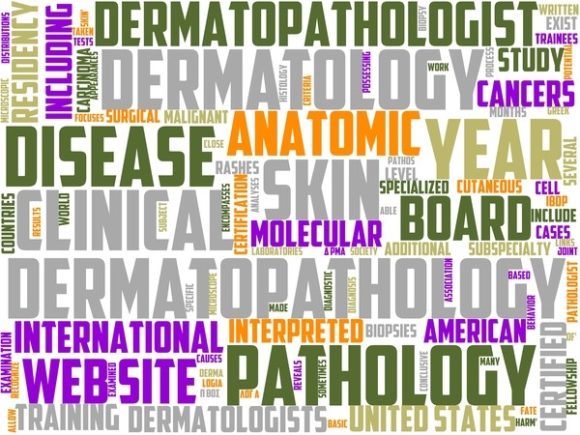
Dermatopathology Wordart Sticker
If you're a medical educator, dermatology resident, lab manager, or science communicator—especially one who values clarity, creativity, and visual impact—you’ve likely faced the challenge of making complex terminology feel accessible. That’s where the Dermatopathology Wordart Sticker stands out: not as a clinical tool, but as a thoughtful design asset rooted in real-world terminology—hand-drawn, color-rich, and purpose-built for communication that resonates.
This isn’t generic clip art. Every word in the wordcloud—melanoma, lichenoid, dysplasia, interface dermatitis, epidermotropism, basaloid, pagetoid, acanthosis, vacuolar, dermal nodule—was selected with diagnostic relevance in mind. The layout avoids clutter while preserving hierarchy: larger, bolder terms anchor key concepts; smaller, supporting words nest organically around them. The result is both scientifically grounded and visually inviting—a rare balance.
Why Hand-Drawn Color Matters in Medical Design
In an era saturated with sterile vector icons and overused stock graphics, hand-drawn elements carry authenticity and warmth. The Dermatopathology Wordart Sticker uses soft watercolor textures, subtle line variation, and intentional color grouping (cool blues for inflammatory terms, warm rusts for neoplastic concepts, earthy greens for structural descriptors) to aid visual parsing—not just decoration. That makes it especially effective for audiences processing dense material: students reviewing histopathology slides, conference attendees scanning a poster, or patients viewing educational handouts.
Unlike algorithm-generated word clouds, this version was curated by someone familiar with dermatopathology lexicon and teaching pain points. Words aren’t repeated arbitrarily; frequency reflects actual usage in diagnostic reports and board prep resources. No filler. No jargon for show. Just terms that matter—and how they relate spatially and chromatically.
Real Applications Beyond the Obvious
You’ll see this sticker used on lab coats and conference lanyards—but its utility goes deeper:
- Educational handouts: Printed at 300 DPI on matte paper, it becomes a quick-reference glossary embedded into case study sheets or slide decks—no need to flip between pages or tabs.
- Resident orientation kits: Paired with a laminated histology cheat sheet, it serves as a tactile, memorable anchor during high-stakes rotations.
- Lab wall displays: Mounted beside microscope stations, it reinforces terminology without competing with specimen images.
- Digital course assets: As a PNG with transparent background, it layers cleanly over lecture slides or LMS banners—adding visual rhythm without sacrificing readability.
- Patient-facing materials: Simplified versions (with fewer technical terms and added lay definitions) help demystify biopsy reports—especially when printed on postcards or tear-off pads in waiting areas.
It also works quietly in commercial contexts: a boutique dermatology clinic might use a cropped section as a watermark on email signatures; a textbook publisher could license it for chapter openers; a med-tech startup might adapt colors to match their brand palette for investor pitch decks.
What Makes It Practical—Not Just Pretty
Usability starts with format. The Dermatopathology Wordart Sticker ships as a high-resolution PNG (transparent background), vector-ready EPS, and print-optimized PDF—no rasterized text, no locked layers. You can scale it to 4” for a lapel pin or 48” for a conference backdrop without pixelation or font substitution.
Color flexibility matters too. While the original palette is thoughtfully calibrated, the vector file allows selective recoloring—say, shifting all “inflammatory” terms to your institution’s brand blue for consistency across training materials. And because spacing and kerning were adjusted manually—not auto-generated—it holds up even when resized down to 1.5” for a badge or textile swatch.
It’s also designed with production realities in mind. CMYK-converted versions are included for offset printing; Pantone references are provided for spot-color applications like embroidered patches or enamel pins. No guesswork. Just precision aligned with real-world output channels.
Smart Implementation Tips
Before dropping it into your next project, consider these practical notes:
- Don’t overload context. Pair it with minimal supporting text—e.g., a single-sentence definition beneath the word “lichenoid” on a handout—or let it breathe as pure visual reinforcement.
- Avoid stacking on busy backgrounds. It reads best against light neutrals (ivory, pale gray) or deep, flat tones (navy, charcoal). Skip textured or photographic backdrops unless heavily blurred or masked.
- Check legibility at intended size. At 12 pt equivalent, only the largest 5–7 words remain fully readable. Use that insight intentionally: make the dominant term the conceptual focus of that piece.
- Respect clinical accuracy. While creative, this isn’t a substitute for peer-reviewed content. Always pair it with verified sources—especially in patient-facing or academic settings.
One unexpected strength? Its adaptability across disciplines. A pathology residency program uses it in weekly “word of the week” emails. A dermatology blogger embeds it in Instagram carousels explaining common misdiagnoses. A histotech school prints it on tote bags for graduation—turning shared language into shared identity.
Final Thought: Design With Purpose
The Dermatopathology Wordart Sticker succeeds because it bridges two often-separated worlds: clinical rigor and human-centered design. It doesn’t simplify pathology—it clarifies it. It doesn’t replace teaching—it supports it. And it does so without sacrificing aesthetic integrity or professional credibility.
Whether you’re prepping for boards, launching a new derm practice, designing a continuing education module, or simply looking for a meaningful way to celebrate the language of skin diagnosis—this is more than decoration. It’s a small, thoughtful tool that helps ideas land, stick, and spread—with accuracy, warmth, and quiet authority.