Etymology Wordart Crafting
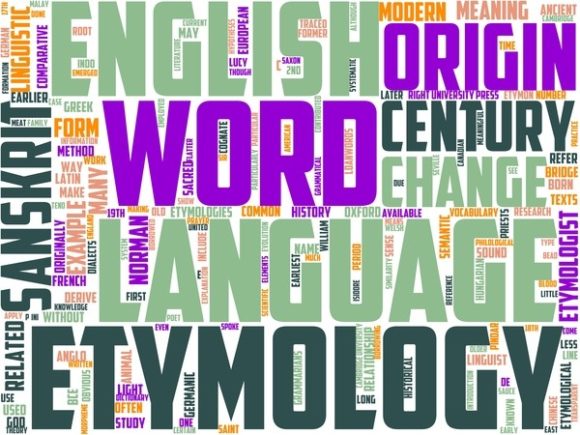
Etymology Wordart Crafting is the intentional fusion of linguistic insight and visual design—where word origins, semantic roots, and historical language shifts become the foundation for hand-drawn, colorful wordclouds. Unlike generic decorative typography, this practice begins with meaning: selecting words not for their visual symmetry or trendiness, but for their etymological resonance—how they evolved, what cultural weight they carry, and how their roots align with your message’s deeper intent. The result is a layered, hand-crafted wordcloud that communicates on two levels: immediate visual appeal and quiet intellectual coherence.
Why Meaning-First Design Matters Strategically
When you choose “resilience” over “strength,” or “kindle” instead of “ignite,” you’re not just swapping synonyms—you’re invoking centuries of usage, connotation, and cultural memory. Etymology Wordart Crafting leverages that depth. For a wellness brand launching a mindfulness journal, using words like *sati* (Pali for “mindful awareness”), *hygge* (Danish for cozy contentment), and *ikigai* (Japanese for “reason for being”)—each drawn in warm, organic strokes—does more than decorate. It signals intentionality, invites curiosity, and quietly reinforces positioning as culturally grounded and thoughtful—not just aesthetically pleasing.
This isn’t decoration-as-an-afterthought. It’s communication-as-infrastructure. A well-executed Etymology Wordart Crafting piece on a conference banner doesn’t just list themes—it traces conceptual lineages: “collaborate” (from Latin *laborare*, “to work”), “dialogue” (Greek *dia-logos*, “through word”), “synergy” (Greek *syn-ergia*, “working together”). That subtle reinforcement helps attendees subconsciously align with shared values before the first session begins.
Where It Adds Real Value—Not Just Visual Polish
Etymology Wordart Crafting delivers measurable strategic value in contexts where clarity, differentiation, and emotional resonance converge:
- Brand identity systems: A sustainable apparel line might build a wordcloud around Proto-Germanic roots like *grōn* (“to grow”), *līf* (“life”), and *sāl* (“soul”)—hand-lettered in earthy pigments. This avoids clichéd green-washing visuals while anchoring messaging in linguistic authenticity.
- Educational materials: Teachers use Etymology Wordart Crafting in vocabulary posters—not just listing “benevolent,” but surrounding it with *bene-* (Latin “well”) and *volens* (“willing”), visually linking spelling, meaning, and history. Students retain roots longer when meaning is embedded in form.
- Product packaging: A small-batch tea brand features a watercolor wordcloud with *chai* (Hindi), *tsa* (Tibetan), *cha* (Mandarin), and *thee* (Dutch)—not as exotic flair, but as a deliberate map of trade routes and cultural exchange. That tells a richer story than “premium blend” ever could.
- Internal culture tools: A remote team’s onboarding notebook opens with a hand-drawn wordcloud built from Old English terms for trust (*treowe*), care (*cēaru*), and craft (*cræft*). It subtly frames shared values in language older—and often more precise—than modern corporate jargon.
How to Approach Etymology Wordart Crafting With Purpose
Start with outcome, not ornamentation. Ask: What decision do I want this to support? What misunderstanding do I want to prevent? What feeling do I want to anchor? If the answer is “make it look nice,” pause. Etymology Wordart Crafting gains power only when aligned with a specific communicative goal.
Begin by auditing your core message. Identify 3–5 foundational concepts—e.g., “innovation,” “belonging,” “craftsmanship.” Then research their roots: consult trusted sources like the Oxford English Dictionary, Etymonline, or academic linguistics databases—not AI-generated etymologies, which often oversimplify or misattribute. Note variant spellings, cognates across languages, and semantic shifts (e.g., how “awful” once meant “awe-inspiring,” not “terrible”).
Next, curate—not collect. A wordcloud with 40 loosely related terms dilutes impact. Instead, select 7–12 words that share conceptual gravity or historical adjacency. Prioritize phonetic texture and visual rhythm: words with open vowels (*serenity*, *kairos*) balance those with sharp consonants (*praxis*, *ethos*). Then sketch by hand—no templates. Let stroke weight, spacing, and color reflect meaning: softer edges for abstract concepts, bolder lines for action-oriented roots.
Timing and Context: When It Works—and When It Doesn’t
Etymology Wordart Crafting excels in moments requiring depth, reflection, or differentiation: launch campaigns for mission-driven products, keynote slide decks for thought leadership, permanent signage in learning environments, or packaging for premium artisan goods. It supports long-term brand equity because its meaning deepens over time—not fades.
It’s less effective—or even counterproductive—in high-speed, low-attention contexts: social media ads with under-three-second dwell time, emergency alerts, or regulatory documentation. There, clarity trumps etymology. Using “utilise” (Latin *utillizare*) instead of “use” adds zero functional value—and may alienate readers unfamiliar with the distinction.
Also avoid it when your audience lacks shared linguistic context. A B2B SaaS dashboard onboarding flow shouldn’t feature Anglo-Saxon roots for “data”—but a print zine for archival photographers might thoughtfully layer *archē* (Greek “origin”), *graphē* (“writing”), and *photōs* (“light”) into a border motif. Match the tool to the audience’s capacity and expectation.
Risks of Using It Without Strategy
The biggest risk isn’t poor execution—it’s misalignment. Slapping an elegant wordcloud of Greek and Sanskrit roots onto a product with no real connection to those traditions reads as appropriation, not homage. Similarly, choosing obscure roots purely for perceived sophistication (“Look how deep we are!”) without explaining them risks confusion or skepticism—especially among educated, discerning audiences who spot superficiality quickly.
Another pitfall is divorcing form from function. A beautifully rendered wordcloud of botanical Latin terms on a yoga mat tag means little if the mat’s materials aren’t plant-based or sustainably sourced. Etymology Wordart Crafting amplifies authenticity—it doesn’t substitute for it.
Practical Integration Tips for Creators and Teams
If you’re designing for clients, embed Etymology Wordart Crafting early in discovery—not as a visual add-on, but as part of messaging strategy. Present root-word options alongside tone-of-voice guidelines and audience insights. Show how “harmony” (Greek *harmonia*, “joint, fitting together”) supports a collaborative workshop series better than “balance,” which implies static equilibrium.
For educators and trainers, use Etymology Wordart Crafting as a scaffolding tool: co-create wordclouds with learners. Have students research one root each, then arrange terms by conceptual family. This builds ownership, retention, and critical thinking—not just decoration.
Small business owners should treat these wordclouds as modular assets. One carefully researched set of roots can scale across touchpoints: simplified into a logo mark, expanded into a poster, adapted into textile patterns, or excerpted into social bios. But resist reusing the same cloud across unrelated initiatives—context recalibrates meaning.
Long-Term Value Beyond the First Use
Well-researched Etymology Wordart Crafting compounds value. A wordcloud built for a book cover becomes source material for chapter headers, author event backdrops, and educator discussion guides. Its roots remain relevant across formats because they’re tied to enduring ideas—not fleeting trends.
More importantly, it cultivates discipline. Choosing words with etymological rigor trains teams to ask harder questions about language: Why this word? What assumptions does it carry? Whose perspective does it center? That habit transfers directly to naming products, writing copy, and shaping customer experiences.
Ultimately, Etymology Wordart Crafting isn’t about making things prettier. It’s about making meaning more precise, more resonant, and more durable. When your visuals grow from the same roots as your strategy, every poster, cup, or notebook becomes a quiet reinforcement—not just of what you sell, but of why it matters.